
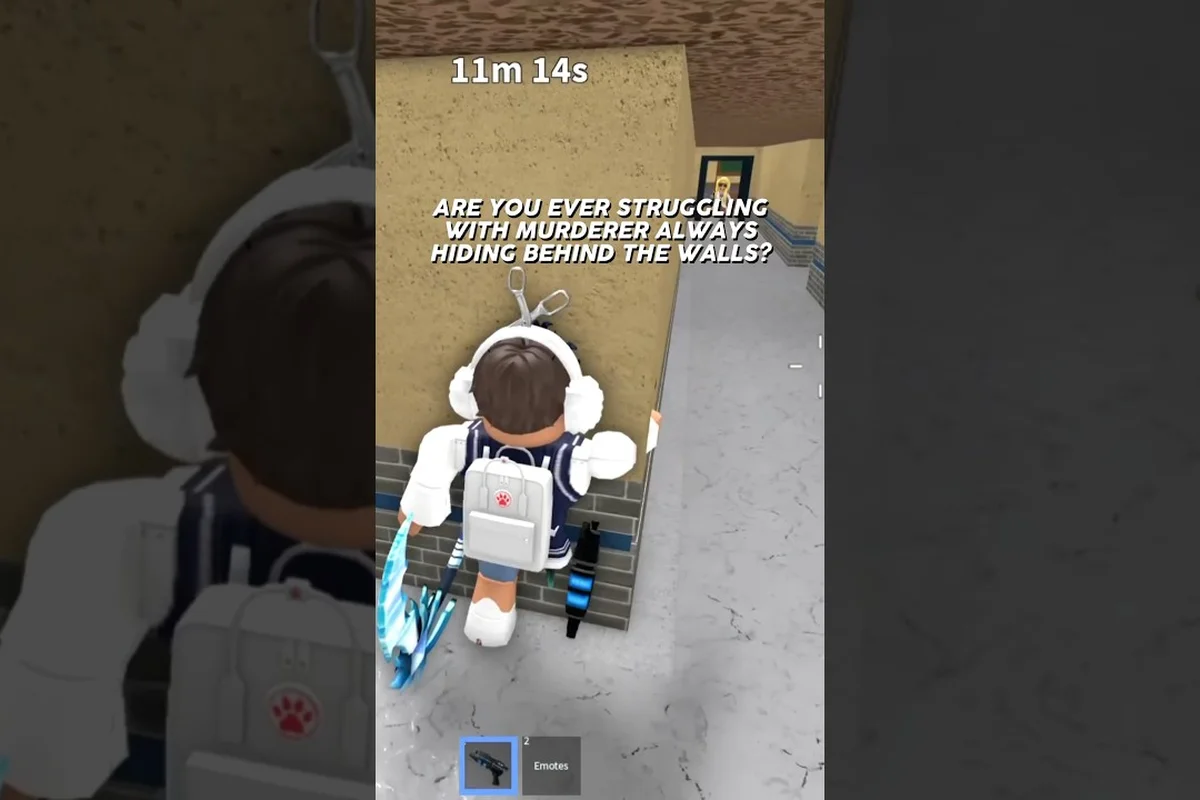
Picking up the sheriff's revolver in Murder Mystery 2 only matters if the shot lands, and most new players whiff the gun because they treat the trigger like a panic button instead of a deliberate action. The truth is that shooting well in this game is less about reflexes and more about where your crosshair is sitting the instant your hand closes around the grip. Once you learn the rhythm of drop timing, follow-through, and movement, the revolver becomes the loudest equalizer in any lobby.
The official Murder Mystery 2 Roblox page confirms that the game runs 12 players per server, which is the exact number you should keep in mind when you size up a room before firing. One stray bullet in a 12-player lobby rarely costs the murderer a kill, but it almost always costs the sheriff their credibility. This guide breaks down the crosshair habits, timing windows, and round-by-round discipline that turn a first-time shooter into a reliable one.
Understanding the Sheriff Role and Why Aim Decides Rounds
The sheriff is one of three core Murder Mystery 2 roles, sitting between the hidden murderer and the larger group of innocent players. The role is assigned randomly at the start of each round, but only one player receives the gun, and the moment a second player touches the dropped weapon it transfers instantly. That single handoff is where most shooting errors begin, because the new carrier flinches, fires into the floor, and gives away the murderer's position for free.
Shooting the sheriff gun in MM2 feels like a simple left-click action on the surface, but underneath the input there are three layers that decide the outcome. First, your crosshair must already be on the target before the gun equips, because the equip animation eats the first half-second. Second, the recoil arc pulls the barrel up and to the right, so the bullet exits slightly off where the dot was sitting. Third, bullet travel is essentially instant in this game, but ping can stretch the kill confirmation by a tenth of a second, so you still need to lead moving targets by a single step.
| Round Phase | Sheriff Priority | Common Mistake |
|---|---|---|
| First 10 seconds | Find the gun, stay near walls | Sprinting into open halls |
| Mid-round | Track suspicious players | Firing at anyone who runs |
| Final 1v1 | Pre-aim doorways, hold angle | Peeking the murderer at distance |
| After a miss | Reset crosshair to center | Panic-spamming follow-up shots |
The roles structure mirrors a classic social deduction loop, where one player has a hidden advantage and everyone else is forced to read behavior to survive. Knowing how the murder mystery 2 sheriff role fits into that loop explains why aim alone is not enough, because shooting the wrong person ends the round in the murderer's favor.
How the Revolver Differs From a Knife
A knife swings on a short arc and recovers fast, so the murderer's combat loop rewards aggression and pressure. A revolver fires once per pull and reloads slowly, so the sheriff's loop rewards patience, angle holding, and pre-aimed lanes. That contrast is what makes mm2 murderer tips a separate study from sheriff training, because the two roles are practically mirror opposites in tempo.
Players who switch between the two roles often carry knife habits into their sheriff gameplay, and the result is wide misses and wasted bullets. The fix is to slow down the input rhythm and treat every trigger pull as a committed action with a deliberate follow-up. Once the input tempo matches the weapon, the revolver stops feeling like a handicap and starts feeling like a scalpel.
Crosshair Placement Before You Pick Up the Gun
Crosshair placement is the single biggest separator between sheriffs who win 1v1s and sheriffs who lose them. Because the equip animation is short but not zero, the bullet leaves the barrel roughly where your cursor was a quarter-second earlier, not where it sits at the exact moment of the click. Practically, this means you should already be tracking the suspect with your mouse before you reach for the dropped weapon, so that the moment your hand closes around the grip, the dot is already on target.
The most reliable habit is to hover the crosshair at head height as you approach any dropped revolver. Murder Mystery 2 maps reuse the same building blocks across every location, so the typical head-height line stays consistent from round to round, which is a small detail that does most of the work for you. If the murderer is the one who dropped the gun, the crosshair will already be pointing at them when you pick it up, and the shot lands before they can knife-react.
Map Sightlines That Decide Crosshair Position
Different maps favor different sightline habits, and learning those habits is what separates a good sheriff from a coin-flip one. A narrow corridor map rewards holding the crosshair on the far door, while a multi-floor map rewards checking vertical sightlines first, because the murderer often drops down from a higher level to ambush. Players who report the highest sheriff win rates on community discords almost always mention that they pre-aim the next room before turning a corner, which is the same habit professional FPS players use on longer-range maps.
| Map Type | Best Crosshair Height | Best Angle to Hold |
|---|---|---|
| Corridor-heavy | Head height, far door | Center of the hallway |
| Open atrium | Mid-chest, near cover | Sweep in slow arcs |
| Multi-floor | Head height, upper ledge | Tilt up 15-20 degrees |
| Maze rooms | Hip height, corner edge | Aim just past the doorframe |
The table above is built from the kind of sightline habits players describe in match recaps, not from any official guide, so treat it as a starting framework rather than a fixed rule. Once you internalize the rhythm, you can adapt the same habit to any new map within two or three rounds.
Timing the Trigger Pull and Reading the Equip Animation
The trigger pull is the moment where most of the work either pays off or falls apart. The revolver's equip animation takes about 0.4 seconds in normal play, and during that window the crosshair is locked to the equip pose, which means you cannot micro-adjust until the animation ends. If the dot is on target when the equip completes, the bullet will land; if the dot is even slightly off, the shot will miss because the recoil arc adds another half-step of inaccuracy on top of your existing error.
A good rhythm to internalize is what experienced players call the two-tick pause: pick up the gun, count two heartbeats, then fire. The pause feels unnatural at first, but it gives the equip animation time to finish and gives your brain time to confirm that the target is actually the murderer and not a panicked innocent running for cover. Players who skip the pause almost always fire into a wall or shoot a teammate, because the click happens during the equip and the bullet exits the barrel before the model is fully ready.
Why Follow-Up Shots Usually Miss
Even when the first bullet lands or misses cleanly, the follow-up shot is where the round is usually lost, because the recoil has lifted the crosshair and the player is still clicking as if the gun were a full-auto weapon. The revolver in Murder Mystery 2 fires one round per pull, and a missed shot cannot be corrected by mashing the trigger. Instead, the correct action is to reset the crosshair to center mass before pulling the trigger again, which gives the second shot the same chance the first one had.
Players who train this reset habit report a noticeably higher sheriff win rate in 1v1 scenarios, because the second shot is what finishes the murderer after a near-miss. If you do not reset, the second shot will sail over the murderer's head, and you will be standing in the open with an empty gun and no plan. The pattern of pause-reset-fire becomes muscle memory after a few rounds, and from that point the revolver feels predictable rather than chaotic.
Tracking Moving Targets and Leading the Step
Targets in Murder Mystery 2 are almost never standing still, because the murderer is constantly strafing to break your aim and the innocents are constantly running to escape. Leading the target by a single step is the difference between hitting a strafing murderer and watching the bullet clip past their shoulder. The lead is small, but it has to be applied before the trigger pull, not during it, because the bullet travel is essentially instant once the click registers.
The cleanest way to build this habit is to track with the keyboard instead of the mouse. If the murderer is strafing left, you keep your crosshair one character-width ahead of their movement and walk them down the screen with the A and D keys. Mouse-only tracking tends to overshoot, because the player chases the model instead of predicting the next position, and the resulting crosshair ends up behind the target by the time the shot fires.
Distance and Bullet Drop
One of the more common myths is that the sheriff's revolver has meaningful bullet drop, but in practice the drop is only relevant at the longest sightlines, and even then the correction is roughly one crosshair width at the extreme edge of a map. The bigger issue at distance is ping stretch, which can make a headshot look like a miss on your screen even though the server registered a hit. Community testing suggests that players above 120ms ping should pre-aim slightly high on long shots, because the server often lags the bullet position by a frame or two.
| Distance | Lead Amount | Drop Correction | Ping Adjustment |
|---|---|---|---|
| Melee (1-2 steps) | None | None | None |
| Mid (room length) | Half a step | None | Slight lead |
| Long (across map) | Full step | One crosshair width up | Pre-aim high if 120ms+ |
This distance table is a community-built reference rather than an official specification, so the values reflect what experienced players report in match threads. The point is to give you a starting point for adjusting your aim at different ranges, not a hard rule that overrides your own judgment.
Round Strategy: When to Shoot and When to Hold
Pulling the trigger is not just a question of aim, because shooting the wrong person ends the round in the murderer's favor, and holding the gun too long lets the murderer close the distance and knife you. The hardest part of the sheriff role is not the shot itself, it is the decision to fire, and that decision is driven by behavior rather than position. Players who shoot the moment they see someone running usually waste their bullet on a panicked innocent, and the murderer then uses the chaos to slip away.
A reliable decision rule is to shoot only after two red flags stack up. A single suspicious action, like sprinting away from the group, is not enough, but a combination of behaviors, like a player who avoided the gun drop and is now lurking near a corner, is a much stronger signal. The rule keeps you from panic-firing at every shadow while still letting you act decisively when the pattern fits.
Holding Angles vs. Pushing the Murderer
Once you have the gun, you can either hold a fixed angle and wait for the murderer to come to you, or you can push them and force the engagement. Holding angles works best in narrow maps where the murderer has to pass through your line of sight to reach the last innocents, and it gives you time to pre-aim. Pushing works best in open maps where the murderer can flank you from multiple directions, because standing still in the open makes you an easy knife target.
The trade-off between the two styles is a matter of map knowledge and personal comfort, and the best sheriffs tend to default to holding and only push when they have a clear sightline and a recent confirmed position. If you push without a confirmed position, you are essentially gambling that the murderer is where you think they are, and that gamble costs the round more often than it wins it. The same logic shows up in Murder Mystery 2 round structure guides, where the recommended play is to gather information before committing to a confrontation.
Common Mistakes That Wreck Sheriff Rounds
Even experienced players fall into habits that quietly ruin their sheriff rounds, and most of those habits are input-level errors rather than strategy mistakes. The single most common error is firing during the equip animation, which produces a shot that exits the barrel before the model is fully ready, and the bullet either misses or hits the floor right in front of the player. The fix is mechanical: pause, confirm the crosshair, then pull.
The second most common error is shooting through teammates, which happens when the murderer is using an innocent as a moving shield. The shot that was meant for the murderer instead hits the innocent, the murderer uses the moment to close distance, and the round is effectively over. The fix is to wait for a clean line of sight rather than trying to thread the bullet through a crowd.
A third, quieter mistake is forgetting to reload intentionally, because the revolver in this game does not auto-reload after a miss. If you fire and miss, the gun is empty until you click again, and that re-click is the moment when the murderer closes the distance. Players who treat the trigger pull as a deliberate action rather than a panic reflex almost never get caught in this trap.
| Mistake | Why It Happens | Simple Fix |
|---|---|---|
| Firing during equip | Input reflex | Add a 0.4s pause after pickup |
| Shooting through teammates | Tunnel vision on murderer | Wait for a clean sightline |
| Panic reload after miss | Input habit from shooters | Treat trigger as a one-shot commitment |
| Holding crosshair too low | Default FPS habit | Lift to head height before pickup |
| Firing at shadows | Anxiety about being knifed | Require two behavior flags before shooting |
Working through the table above is a faster way to clean up your sheriff play than grinding rounds, because each row targets a specific input pattern rather than a general strategy. The mm2 murderer tips community threads often focus on knife play, but the mirror-image mistakes on the sheriff side are just as common and just as fixable.
Training Drills to Build Reliable Aim
Improving your sheriff aim in Murder Mystery 2 does not require a separate training mode, because the game's regular rounds already provide enough repetition to build the habit. The trick is to run deliberate practice rounds where you focus on one mechanic per match, rather than trying to fix everything at once. One round you only work on crosshair placement, the next round you only work on trigger timing, and the round after that you combine the two.
A useful weekly loop is to play three rounds with a single focus, then a fourth round where you let yourself play naturally and notice which habit still slips. Players who report the fastest improvement usually describe this loop as a kind of self-coaching rhythm, where each round becomes a small data point rather than a win-or-loss gamble. The same loop is recommended in broader Murder Mystery 2 beginner guides because it scales from sheriff training to knife timing to coin economy.
Solo Warm-Up vs. Live Round Practice
Solo warm-up is useful for getting your mouse sensitivity and crosshair placement calibrated, but it cannot simulate the pressure of a real round where the murderer is hunting you. Live round practice is where the actual habit forms, because the timer, the chat, and the movement of other players all add pressure that solo play cannot reproduce. The right balance is a short solo warm-up of two or three minutes, followed by a stack of live rounds where you commit to one focus per match.
If you find yourself getting frustrated, step back and remember that the sheriff role only appears roughly once every three rounds in a 12-player lobby, so your actual training volume is smaller than it feels. Players who mentally account for that lower frequency tend to stay calmer during the rounds where they do not have the gun, which in turn makes them sharper during the rounds where they do.
Frequently Asked Questions
How do I shoot the sheriff gun accurately as a beginner in Murder Mystery 2?
Pause for about half a second after picking up the revolver, keep your crosshair at head height, and only fire once the dot is on target. Beginners who skip the pause usually fire during the equip animation and miss into the floor. Combine the pause with a clean sightline and a single behavior flag from the suspect.
When should the sheriff shoot the murderer in MM2?
Shoot only after two behavior flags stack up, like a player avoiding the gun drop and lurking near a corner. A single suspicious action is not enough, because panic-firing at a running innocent ends the round in the murderer's favor. The two-flag rule keeps you decisive without wasting bullets.
Can the sheriff miss on purpose to bait the murderer?
Yes, but only on maps where you have a clear fallback position and a teammate who can confirm the murderer's identity. A controlled miss into a wall can pull the murderer out of cover, but it also leaves you with an empty revolver, so the bait only works if you have a plan for the next two seconds. Without that plan, the bait is just a wasted round.
What happens if the sheriff kills an innocent by accident in Murder Mystery 2?
The round continues, but the murderer gains a massive advantage because the team is now down a player and the sheriff's gun is usually spent. According to the official Roblox page, each server runs 12 players, so a single friendly-fire kill reshapes the lobby balance. The fix is to wait for a clean sightline and to confirm the target before pulling the trigger.
Does ping affect sheriff accuracy in MM2?
Yes, especially above 120ms, where bullet registration can lag a frame behind your screen. Community testing suggests pre-aiming slightly high on long shots at high ping, because the server often stretches the bullet position. The effect is small at close range but noticeable across the longest map sightlines.