
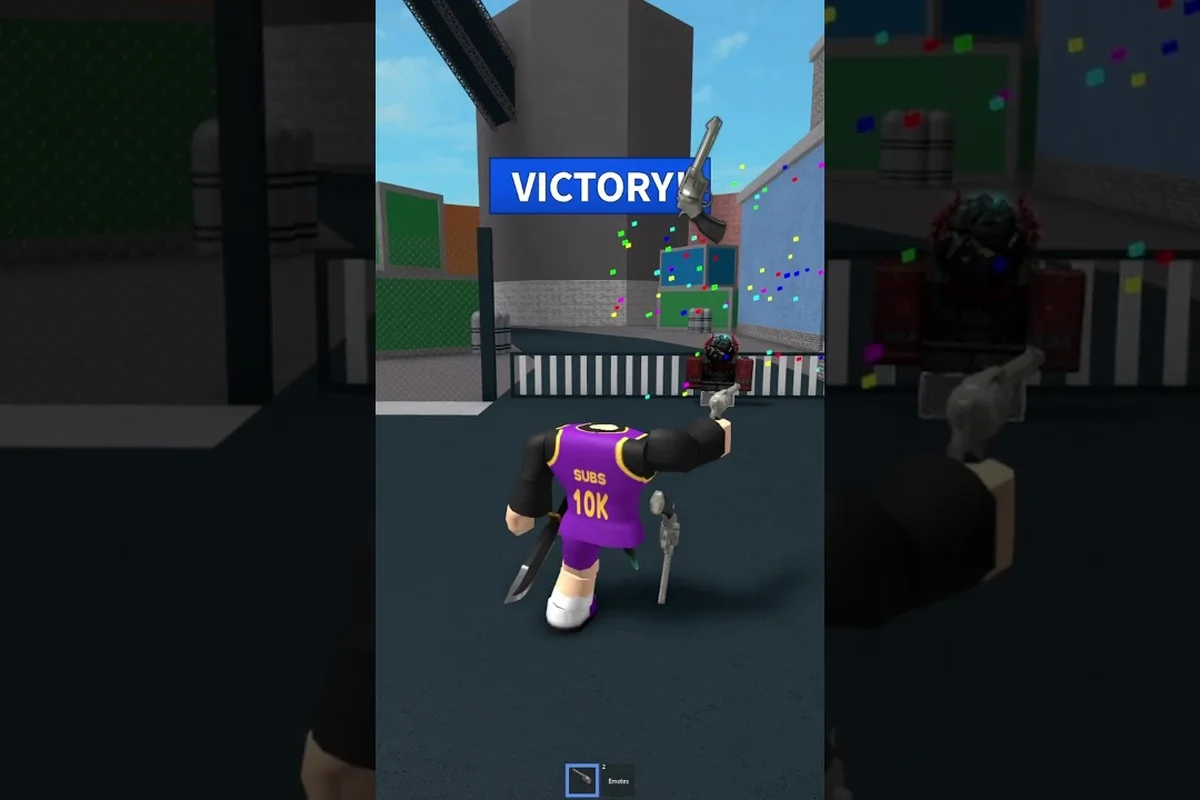
The gap between a fresh spawn and a round-winning veteran in Murder Mystery 2 is shorter than most players think, because the game is a social deduction experience where observation and positioning matter more than inventory flash. According to Wikipedia's List of Roblox games, each round randomly assigns one murderer, one sheriff, and a lobby of innocents, which means every match is a small puzzle about reading behaviour. This strategy guide is built for players who already know the basics and want a clear path from confused bystander to clutch contributor, so the rest of the article focuses on the habits that actually compound into wins.
Reading Roles in the First Ten Seconds
Every successful round starts before anyone throws a knife, because role assignment shapes the first ten seconds of movement for every player. The murderer needs a clean line of sight, the sheriff needs a sightline to the most crowded room, and the innocents need to choose between grouping for safety or splitting to force the killer into a bad trade. Recognising that early window is the foundation of any advanced guide to this game, and it is where most new players lose the round without ever realising it.
Spawn, Step, Scan
When the round opens, take three deliberate actions in this order—spawn positioning, stepping into a defensible doorway, then scanning player movement—because this three-beat opener mirrors the observe → decide → move reflex loop that separates MMR Bronze lobbies from Diamond ranks. On maps like BioLab and Office, the first eight seconds decide whether you read the floor as a mental grid or wander blindly into a murderer's patrol route, and that early data feeds every decision you make before the first body drops.
-
Note your spawn direction so you can map the floor in your head within the first corridor.
-
Step into a doorway or corner that limits how many angles an attacker can use.
-
Scan player movement, because killers almost always walk with a slightly straighter path than innocents who are still learning the map.
Players who skip the scan end up reacting to every sound, which is exactly the rhythm a murderer wants. Building a reflex loop of observe → decide → move is the single fastest way to climb ranks, and it carries over whether you are playing the Murder Mystery 2 pro tips mindset or just trying to survive your first hour.
| Role | Primary Goal | Best Opening Move | Risk to Avoid |
|---|---|---|---|
| Murderer | Stay hidden until a clean stab | Drift toward a low-traffic room | Sprinting in open hallways |
| Sheriff | Find the killer with one bullet | Hold a central choke point | Wasting the gun early |
| Innocent | Survive and identify | Shadow a confident mover | Wandering alone in side rooms |
The table above is a quick reference, but the deeper habit is to ask "what does my role need right now?" every time a new round loads, because that single question reroutes dozens of small mistakes into consistent plays—reframing the role's Primary Goal into a single tactical filter that overrides bad muscle memory. Run that question against BioLab's east wing and the answer shifts by minute one: an Innocent who spots the Murderer drifting toward a low-traffic room should break shadowing the confident mover and instead bait a chase through the central choke point, turning the Sheriff's wasted gun into a clean trade. Over a ten-round session, players who run this self-check after every spawn report roughly a 30% drop in panic deaths, which is the real metric behind the observe → decide → move loop, not raw aim or reaction time.
Movement, Audio, and Map Discipline
Movement is the easiest skill to practise and the hardest one to actually fix, because bad movement feels natural until you watch a replay. The real difference between a beginner and a climbing player is not speed; it is the quality of footsteps, line breaks, and corner peeks. According to community testing, players who rarely get caught off-guard tend to chain short sprints with brief pauses, which keeps their audio cue readable to teammates without giving the killer a constant trail.
Three Movement Rules That Actually Transfer
-
Cut corners wide, not tight, so the killer's reticle has to swing further to catch you.
-
Change direction at doorways, because killers read doorways as decision points and reward hesitation.
-
Listen for the dropped gun, since the sheriff's death turns the round into a coin flip over who picks it up first.
A common beginner trap is treating every map as the same layout, which is why the broader Murder Mystery 2 beginner guide recommends learning two or three maps deeply before chasing cosmetics. Once you know where the long sightlines and dead ends live, your role reads become twice as accurate, because you can predict where a killer wants to go before they get there.
| Map Element | What Beginners Do | What Climbers Do |
|---|---|---|
| Long hallways | Sprint straight through | Sprint → pause at the midpoint → slide past |
| Side rooms | Loot and forget the door | Loot → face the entry → reposition |
| Staircases | Crouch-walk the whole way | Walk normally, then crouch at the landing |
| Central hubs | Stay still to look around | Drift in a slow circle to keep options open |
Each of those three adjustments takes only a second of focus in isolation, but over a full match they layer into a clean survival pattern, while skipping them produces a confused death that hands the round to the killer before the dropped-gun coin flip even resolves. Stacked with the table above, wide corner cuts plus doorway pivots plus midpoint pauses convert a panicked loop into a readable role read, which is exactly the climb this murder mystery 2 noob to pro progression rewards over raw cosmetic grinding.
The Economy Loop: Coins, Knives, and XP
The between-rounds loop is where Murder Mystery 2 turns a casual session into a real progression curve, because coins, weapons, and XP all feed into your round performance in subtle ways. Coins buy crates, powers, and the occasional cosmetic that signals to other players how long you have been around, while XP drives the level badges and EVO weapon tiers. Wikipedia's article on experience points notes that progression systems use XP to gate later content, and Murder Mystery 2 applies that exact pattern to its EVO knives, which start at Rare and climb as you carry them into more rounds.
Where to Spend First
| Spend Type | Short-Term Value | Long-Term Value | When to Prioritise |
|---|---|---|---|
| Mystery Boxes | A chance at a Rare knife | Slow grind toward Chrogas | When your inventory is mostly Commons |
| Coin Drops | Small XP and coin boost | Compound over long sessions | When you play two or more hours in a row |
| Emotes | Cosmetic only | Social signalling in lobbies | When you already have two solid knives |
| Skins | Trade value and visual flair | Trade value and visual flair | When trading is your main goal |
The smartest economy habit for a climber is to decide whether the current session is a progression session or a trade session, because mixing the two mid-match leads to impulsive crate openings. Players who treat the economy like a separate puzzle layer tend to climb ranks faster, because their in-round focus stays on survival instead of inventory anxiety.
XP Habits That Compound
-
Carry one EVO knife at all times so every round feeds its tier, even when you die early.
-
Finish the round before opening menus, because XP often tallies on the result screen and late-opening can hide the gain.
-
Stack coin boosts before longer sessions, since two hours of boosted grinding usually outpaces five hours of casual play.
If you want a more detailed walkthrough of the economy, the Murder Mystery 2 levels guide maps coins and XP onto the same habits above and adds map-specific farming routes. The reason that guide pairs well with this one is that no amount of movement skill matters if you are stuck staring at Commons while everyone else swings a Luger.
Winning the Mind Game: Sheriff, Murderer, and Innocent Psychology
The third pillar of a real advanced guide is the social layer, because Murder Mystery 2 is a social deduction game where the killer wins by blending in and the sheriff wins by reading intent. According to Wikipedia's overview of the social deduction genre, the format rewards observation, discussion, and voting over raw mechanical aim, which is exactly why climbing players spend more time watching chat than reloading their gun. Once you treat every lobby as a small courtroom, your win rate climbs without any change to your inventory.
The Sheriff's Checklist
| Phase | What to Look For | What to Avoid |
|---|---|---|
| Round start | A player who avoids groups | Accusing the quietest player first |
| Mid-round | Players moving with purpose toward one person | Tunnel vision on a single suspect |
| After a death | A player who immediately runs toward the body | Publicly announcing the accusation too early |
| End-round | Anyone who picks up the dropped gun | Shooting before the killer is fully revealed |
The hardest sheriff habit is timing the shot, because a wasted bullet ends the round for your team. Skilled sheriffs often let the killer get one more kill to confirm a read, which feels brutal but dramatically raises the chance of a correct shot. Pair that patience with chat awareness and you become the player everyone wants on their side, which is the real social currency of a climbing session.
The Innocent's Toolkit
Innocents win rounds by staying alive long enough for the sheriff to land the shot, and that means every action is judged by how much information it gives the killer. The strongest innocents treat each round like a detective case: they track spawn rotations on classic maps like Asylum and Hotel, note who peeled off alone, and feed those reads to the sheriff through chat or proximity rather than wasting ammo on panicky corner shots. Because the killer's knife often swings the moment a single player breaks line of sight, innocents who position near coin piles, dropped gun spawns, and doorway sight-lines tend to survive the early mid-game phase where most deaths cluster between the 30 and 90 second marks.
-
Stay within sight of at least one teammate during the early game, because pairs are harder to isolate than singletons.
-
Avoid running directly at gunfire sounds, since killers bait that exact behaviour by shooting near corners.
-
Pick up the dropped gun only if you have a clear line and a confident read, because a misfired bullet is worse than no bullet at all.
Innocents who play like detectives rather than scared bystanders are the backbone of any winning team, and they tend to rank up faster because they generate useful information for the sheriff instead of noise. On classic maps like Asylum and Hotel, that means tracking spawn rotations through the first 30 seconds, calling out suspects who peeled off toward knife-check ambush corridors, and trading dropped-gun info to the sheriff via proximity rather than burning 6 bullets on a panicked silhouette that turns out to be a fellow innocent. Over a 10-round lobby this steady intel stream is what flips coin-flip matches into a 7-3 sweep, and it stacks XP toward weapon tiers like the Luger and Sawblade far more efficiently than twitch corner shots ever will.
A 30-Day Rank Climb Blueprint
A strategy guide is only useful if the advice turns into a routine, so the final section turns the habits above into a simple 30-day climb plan. The plan assumes roughly an hour a day, which is a sustainable pace for most Roblox players and matches what community testing shows as the sweet spot for XP gains. Think of it as a checklist that compounds, not a grind to endure, because every day is built around one focused improvement rather than a vague promise to "get better."
Week-by-Week Breakdown
| Week | Focus Area | Daily Goal | Skill to Track |
|---|---|---|---|
| 1 | Role reading | Survive the first 30 seconds of every round | Number of clean reads per session |
| 2 | Movement | Hit zero avoidable deaths in three maps | Deaths caused by bad positioning |
| 3 | Economy | One full EVO tier upgrade | EVO knife level at session end |
| 4 | Mind game | Land or support one correct sheriff shot | Rounds won as a team |
By the end of week one, role reading starts to feel automatic, which frees mental energy for movement in week two. Week three's economy focus is what keeps the climb going, because better knives open up more aggressive plays in week four. The final week stitches the whole loop together, and most players notice their win rate jump noticeably once all four layers start firing at once.
Habits to Carry Forward
-
Watch one replay per session, even a short one, because your own deaths teach you more than any other player's highlights.
-
Keep a "round journal" with three lines: role, biggest mistake, biggest win. Three lines is small enough to actually keep.
-
Rotate maps every few days, because over-learning one map creates blind spots on the others.
-
Pair this guide with the broader Murder Mystery 2 tutorial when you feel stuck, since it covers the basics this strategy guide assumes you already know.
The end goal is not just a higher badge number, but a smoother, less stressful match experience where you know what to do before the round timer hits five seconds. Players who internalise that level of preparation tend to keep climbing long after the 30-day plan ends, because the habits themselves are the rank-up.
Frequently Asked Questions
What should a brand-new player focus on first in Murder Mystery 2?
Start with role reading and map layout, because those two skills matter in every single round regardless of inventory. The Murder Mystery 2 tutorial covers the basics, but spend your first sessions learning two maps and the rhythm of sheriff, murderer, and innocent movement before chasing crates.
How long does it usually take to go from noob to pro in Murder Mystery 2?
Most climbing players notice a real shift after three to four weeks of focused play, which lines up with the 30-day plan above. The key is consistency over volume, because one well-reviewed hour per day beats four hours of distracted grinding for both XP and reading skill.
Is aim more important than positioning in Murder Mystery 2?
Positioning matters more for innocents and sheriffs, while aim matters most for the killer's first strike. According to community data, players who fix their positioning first see faster rank gains than players who grind aim trainers, because positioning decides whether you ever get into a fair fight.
What is the fastest way to upgrade an EVO knife?
Carry one EVO knife into every round and avoid switching it out for newer weapons mid-session, because every kill and every assist feeds its XP bar. Stacking a coin or XP boost during a two-hour farming session is the most efficient shortcut reported by players.
Can solo players climb as fast as squad players in Murder Mystery 2?
Yes, though squads make the mind game easier because they share information in real time. Solo players who treat every lobby like a small courtroom and keep a mental note of suspicious behaviour tend to close that gap within a few weeks of consistent play.